
Over the past few years, we’ve seen many companies make the difficult decision to relocate their headquarters. The reasons have been varied, but can generally be boiled down to a few key reasons: rising tax burdens, regulatory pressures and a growing sense they were no longer welcome.
No longer feeling welcome may actually be an amalgam of all the reasons squished down into a single reason. It’s one thing to watch every manufacturing business get burdened with taxes, but it’s another to see your neighbors and workers being legislatively prevented from owning the products they’re making on your assembly lines.
If that sounds like a ridiculous idea, then imagine how it must have sounded to Smith & Wesson when Massachusetts legislators introduced legislation that would ban ownership of the modern sporting rifles that made up a “significant” portion of their business. Workers could make them, but they couldn’t own them.

That Massachusetts legislation was introduced in 2022. In 2023 S&W relocated their headquarters to Maryville, Tennessee.
Yes, Springfield is still operating, but in a significantly reduced and reconfigured size.
Tennessee hasn’t benefitted solely from Massachusetts’ legislative intransigence. In 2016 Beretta USA moved its manufacturing operations from Acokeek, Maryland to a $45 million state-of-the-art facility in Gallatin, Tennessee. Once again, “socially responsible” legislation (the Firearms Safety Act of 2013) was more important to legislators than tax revenues or jobs.
Gun-friendly states have begun openly recruiting companies. SHOT Show’s Governors Forum is a very good example as governors answer relevant questions while weaving in reasons why SHOT attendees need to give their locations serious consideration as their new homes.
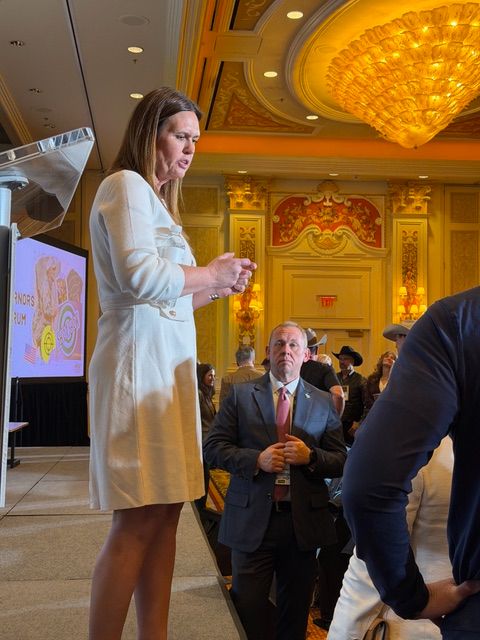
It’s not just major corporations. Both biggies and boutiques are increasingly voting with their feet when facing tax increases, confusing regulatory environments and, yes, an increasing sense of not being welcome. Often the loss is more than simply the companies. Increasingly, employees are relocating with their employers. Reasons cited include everything from job satisfaction to lowered taxes and costs of living that allow them to improve their personal situations along with preserving their employment.
And it’s not just guns. Charles Schwab moved from San Francisco to north Texas. Tesla moved out of Palo Alto and Chevron, the oil giant that began in California left for Texas. Marcus Lemonis says he won’t open or re-open any of his businesses in California. His reasoning was simple: “California has created one of the most overregulated, expensive, and risky business environments for business.”
Wednesday, another longtime California company announced it was throwing in the proverbial towel on California. Yamaha Motor Company is leaving Cypress, California after 47 years there. The company will be moving its U.S. headquarters to Georgia, unifying their operations into the Peach State.
The reasoning is, once again, familiar: a need to improve profitability and relieve tax and regulatory pressures.
We’re told Yamaha will be selling its 25-acre Cypress property and complete the relocation to Atlanta suburb Kennesaw, Georgia by 2028. The company’s marine and motorsport business facilities relocated to Kennesaw in 1999 and 2019. The Cypress facility housed corporate and financial services on the Cypress property. The move will involve sale of all land, offices, warehouses and fixed assets in California.
Yamaha explained the decision in their announcement as “one of the Company’s key measures aimed at improving asset efficiency and enhanced profitability in the United States.” The company said it is also making structural reforms “in response to cost increases resulting from U.S. tariffs and changes in the marketing environment.”
Relocation decisions for corporations are never easy. But some states are making it easier than others.
As always, we’ll keep you posted.
—Jim Shepherd